1. Home
  2. |
  3. Minimize the Impact of Identity Breaches with Policy-driven Authorization

Minimize the Impact of Identity Breaches with Policy-driven Authorization

Reduce standing privileges, limit lateral movement, and enforce least-privilege access with dynamic authorization.

The Challenge

Excessive Access Creates Excessive Risk

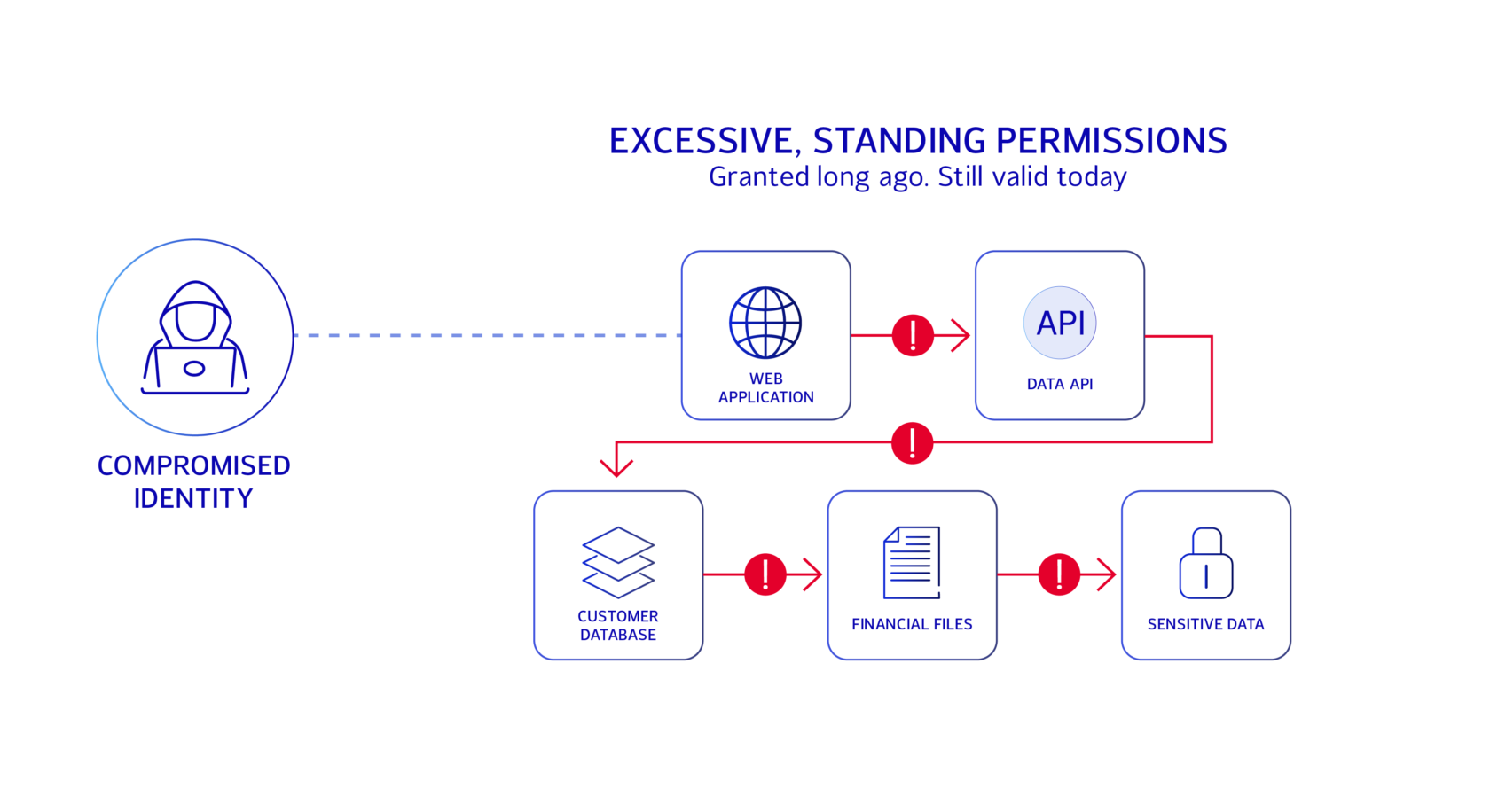
Most identity breaches do not begin with sophisticated attacks. They begin when attackers gain access to an account that already has more permissions than necessary. Standing access, extra accounts, and broad roles give attackers chances to move sideways. They can reach sensitive systems and make a breach worse.

Common challenges include:

  • Excessive permissions that accumulate over time
  • Standing access that remains active long after it is needed
  • Increased opportunities for lateral movement after compromise
  • Difficulty enforcing least-privilege access
Guy in hoodie working at a computer

How Policy-driven Authorization Reduces Identity Breach Risk

Eliminate Standing Access

Grant access only when needed and only for the time required to finish a task. This supports Zero Standing Privilege (ZSP) and Just-in-Time (JIT) access models.

Enforce Least Privilege

Authorization policies continuously evaluate user, resource, and environmental attributes to ensure users receive only the access needed at that moment.

Real-time Decisions

Policies evaluate factors such as device posture, location, time, data sensitivity, user relationship, and risk signals before granting access. Access can automatically adapt as conditions change.

Limit Lateral Movement

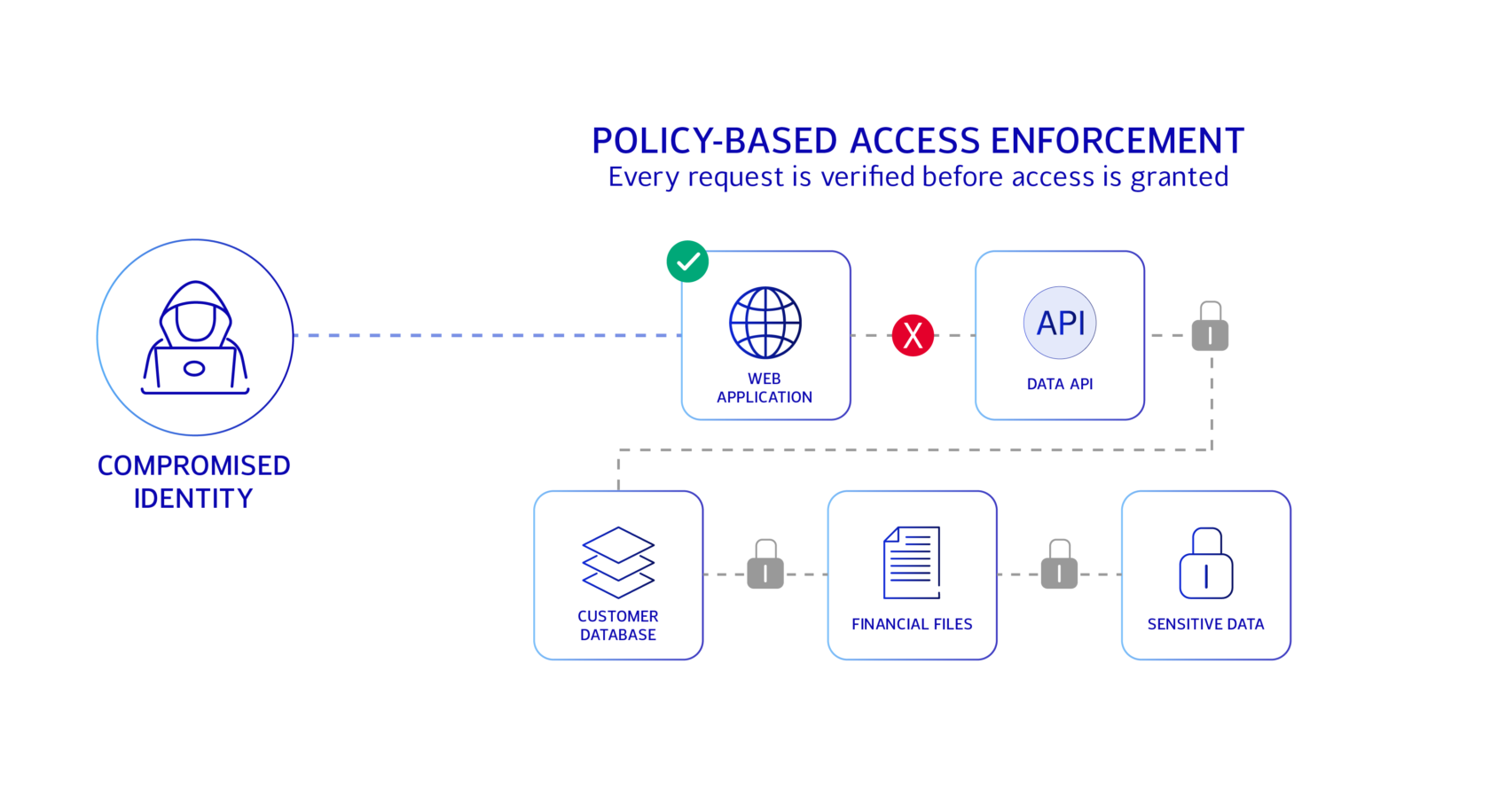
 Even if someone compromises an account, policy-based authorization limits access to approved resources under current conditions. This reduces the attacker’s ability to move through systems and data.

Axiomatics Authorization Management Platform

Limiting Lateral Movement

When an identity is compromised, traditional access models often rely on permissions granted days, months, or years ago. As a result, attackers can use the compromised account to move laterally across applications, APIs, and sensitive data.

Dynamic, runtime authorization continuously evaluates every access request against real-time business and security context. Instead of granting broad access based on authentication alone, authorization policies determine what resources can be accessed and under what conditions.

Authentication Verifies Identity. Authorization Limits Impact.

Multi-factor authentication is a critical security control, but it does not determine what a user can access after they authenticate. If credentials are compromised, attackers often inherit the same permissions as the legitimate user.

Policy-driven authorization complements MFA by making fine-grained access decisions at runtime. Even when an identity is compromised, authorization policies can restrict access based on risk-levels and various attributes. This helps contain attacks, reduce lateral movement, and minimize the blast radius of identity breaches.

Business Outcomes

Reduce Risk Without Sacrificing Productivity

Policy-driven authorization helps organizations move beyond static access controls by continuously evaluating who should have access, to what, and under which conditions.

Reduced Breach Impact

Limit the damage a compromised account can cause by restricting access to only what is required under current conditions.

Stronger Zero Trust Security

Continuously verify access requests and enforce policy decisions at runtime to support Zero Trust initiatives.

Improved Compliance

Protect sensitive and regulated data with fine-grained authorization controls that support requirements such as GDPR, HIPAA, and industry-specific regulations.

Secure Collaboration

Enable employees, partners, suppliers, and contractors to access the information they need without introducing unnecessary risk or encouraging Shadow IT.

FAQs

An identity breach occurs when a cybercriminal gains access to a legitimate user account and uses those credentials to access systems, applications, or sensitive data. Modern identity breaches often exploit excessive permissions, standing access, and overprovisioned accounts rather than technical vulnerabilities.

Standing access refers to permissions that remain active continuously, regardless of whether a user currently needs them. Over time, standing access increases security risk and often leads to excessive privileges.

Overpermissioned accounts give users access beyond what is required for their role. If those accounts are compromised, attackers can access more systems, move laterally, and cause greater damage.

MFA is an important security control, but it does not eliminate the risk of compromised accounts. Policy-driven authorization complements MFA by controlling what an authenticated user can access and under what conditions.

Policy-driven authorization evaluates access requests in real time using attributes and contextual information. This limits unnecessary access, reduces standing privileges, and helps contain compromised accounts.

Request a Demo

Take the Next Step in Securing Your Enterprise Systems

Schedule a meeting with our experts to discover how the Axiomatics Authorization Management Platform helps you implement fine-grained access control, support Zero Trust, and meet today's security and compliance requirements.

Explore More Content

From AI to Authorization: Key Takeaways from Identiverse 2026

Product

Explore the Platform Capabilities Behind Secure, Scalable Authorization

This website uses cookies

Cookies consist of small text files. They contain data that is stored on your device. To enable us to place certain types of cookies we need to obtain your consent. At , corp. ID no. , we use the following kinds of cookies. To read more about which cookies we use and storage times, click here to access our cookies policy.

Manage your cookie-settings

Necessary cookies

Check to consent to the use of Necessary cookies
Necessary cookies are cookies that must be placed for basic functions to work on the website. Basic functions are, for example, cookies which are needed so that you can use menus on the website and navigate on the site.

Functional cookies

Check to consent to the use of Functional cookies
Functional cookies need to be placed on the website in order for it to perform as you would expect. For example, so that it recognizes which language you prefer, whether or not you are logged in, to keep the website secure, remember login details or to be able to sort products on the website according to your preferences.

Cookies for statistics

Check to consent to the use of Cookies for statistics
For us to measure your interactions with the website, we place cookies in order to keep statistics. These cookies anonymize personal data.

Personalization cookies

Check to consent to the use of Personalization cookies
In order to provide a better experiance we place cookies for your preferances

Cookies for ad-tracking

Check to consent to the use of Cookies for ad-tracking
To enable us to offer better service and experience, we place cookies so that we can provide relevant advertising. Another aim of this processing is to enable us to promote products or services, provide customized offers or provide recommendations based on what you have purchased in the past.

Ad measurement user cookies

Check to consent to the use of Ad measurement user cookies
In order to show relevant ads we place cookies to tailor ads for you

Personalized ads cookies

Check to consent to the use of Personalized ads cookies
To show relevant and personal ads we place cookies to provide unique offers that are tailored to your user data