



A couple weeks ago, Mark Berg, several other members of the Axiomatics team, and I braved the 41°C (105°F) Las Vegas heat to attend Identiverse 2026. Widely regarded as one of the premier events for identity professionals, Identiverse brings together practitioners, vendors, standards bodies, and industry leaders to discuss technologies, trends, and challenges shaping the future of the industry.
As a first-time attendee, I was especially excited to experience Identiverse for myself. Over the years, I’ve heard colleagues describe it as one of the highlights in their calendar each year. After spending 4-days meeting with customers, partners, and identity professionals, it’s easy to see why.
Now that we’ve had some time to reflect on the event, Mark and I sat down to discuss some of the key themes, insights, and takeaways that stood out to us.
What were the most important trends or themes you noticed?
Emme: When looking at the agenda one thing was clear: AI was going to be a central theme. It seemed like nearly every session touched on AI in some way. Throughout the event, we heard recurring themes around non-human identity (NHI) discovery, runtime controls, and agentic intent management.
A consistent message within AI was the scale of what’s emerging. In many organizations, NHIs already outnumber human identities, with estimates ranging from 80:1 to 144:1. While the ratios vary, the direction is clear. Organizations are facing to manage more machine and agent identities than ever before.
Because of both the scale and speed that AI accelerates, many speakers highlighted the need to shift to continuous identification and authorization in order for survival as traditional models can’t keep pace.
As Andi Hindle noted in the opening keynote, “Access decisions must happen at runtime.” That idea was echoed throughout the event and reflects a broader shift towards real-time, intent-based authorization and how organizations will need to speed up Zero Trust adoption.
Beyond AI, another theme that surfaced repeatedly was the importance of open standards. Many speakers encouraged greater industry participation, recognizing that standards are essential for interoperability and innovation. They also highlighted that standards will be critical for enabling interoperability, reducing vendor lock-in, and fostering innovation.
And while I may be a bit biased, authorization was also a frequent topic throughout the conference. It appeared in discussions about AI governance, APIs, and Zero Trust architectures. Perhaps the clearest signal came during the closing keynote, when an audience member asked where organizations should start with authorization. The answer that was given? The speakers recommended organizations start to look at AuthZEN and look for vendors who are involved in AuthZEN.
Which session or speaker resonated with you the most, and why?
Mark: The keynote by Noelle Russell! It was both entertaining and educational at the same time. Stressed that we need to be the gatekeepers because there are many leadership teams that either do not understand or do not care about how fast and easily AI projects can leak sensitive information. The number of letters we all get from companies about data breaches validates this. Perhaps they care about their own information but it is clear to me they do not appear to care the same about protecting the information of their customers or even their employees. Yes that is a personal rant of mine….. We as IAM professionals need to accept that leadership in most companies simply do not care. If they did we wouldn’t be getting server data breach letters a year about how our personal information was compromised. If we as IAM professionals tell them their precious AI project must wait several months or a year so proper authorization can be added to then they will press on without it. We need to move as fast as AI does.
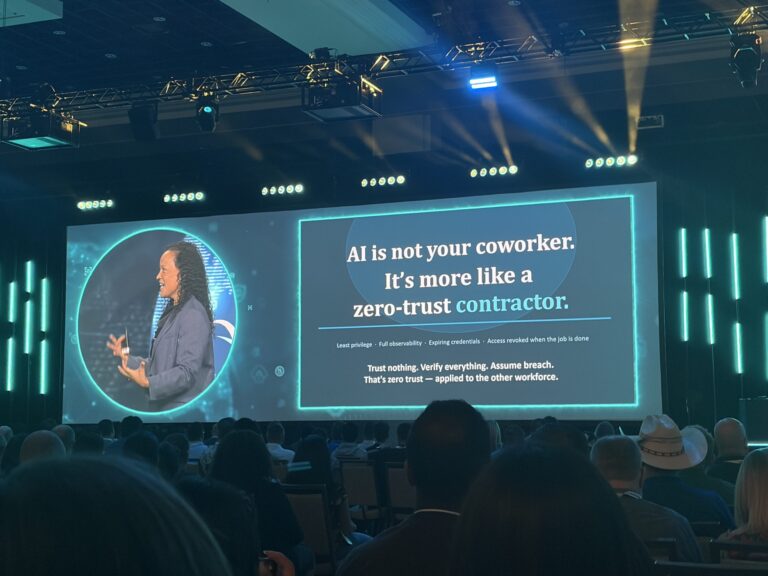
Now I sound like a useless consultant or analyst (yes another personal rant of mine) because I did not state how to do that. I’m afraid there will not be a one sized fits all approach here but building externalized authorization into AI solutions will position you to take on simple and complex authorization requirements. We need to start somewhere and evolve from there.
Looking back at your sessions, how would you summarize the key points you wanted attendees to take away, and what was the audience’s feedback?
Mark: AuthZEN is here but if you do not try and force the vendors you buy software from to adopt it then it might die on the vine. Externalized authorization has matured and has overcome many of the excuses some have used in the past to not adopt it. Those that already have are in a much better place to be able to apply authorization in their AI initiatives.
If someone couldn’t attend, what would you say is the single most important thing they missed?
Emme: The single most important thing someone would have missed is the conversations. Identiverse is ultimately about the identity community coming together — sharing challenges, learning what has worked in practice, and strengthening relationships across peers in the industry. Those discussions are where a lot of the real value of the event comes through.
A broader takeaway is how clearly AI is reshaping priorities. Organizations that already have strong governance and a solid IAM foundation are in a better position to adopt and scale AI safely. At the same time, AI is accelerating the need to mature authorization practices. It’s no longer enough to rely on static models, there’s a growing focus on intent-based, context-aware, runtime access.
Mark: Like most conferences the more you put into it the more you get out of it. Also, like most IT security conferences or any IT related conference these days AI is a common theme. A couple of years ago we could hide from it but not any longer. I did not attend Identiverse in 2025 and almost everywhere I looked had something to do with AI and it was not just a one way stream from the vendor but questions from attendees as well.
Thank you to those who visited us at Identiverse!
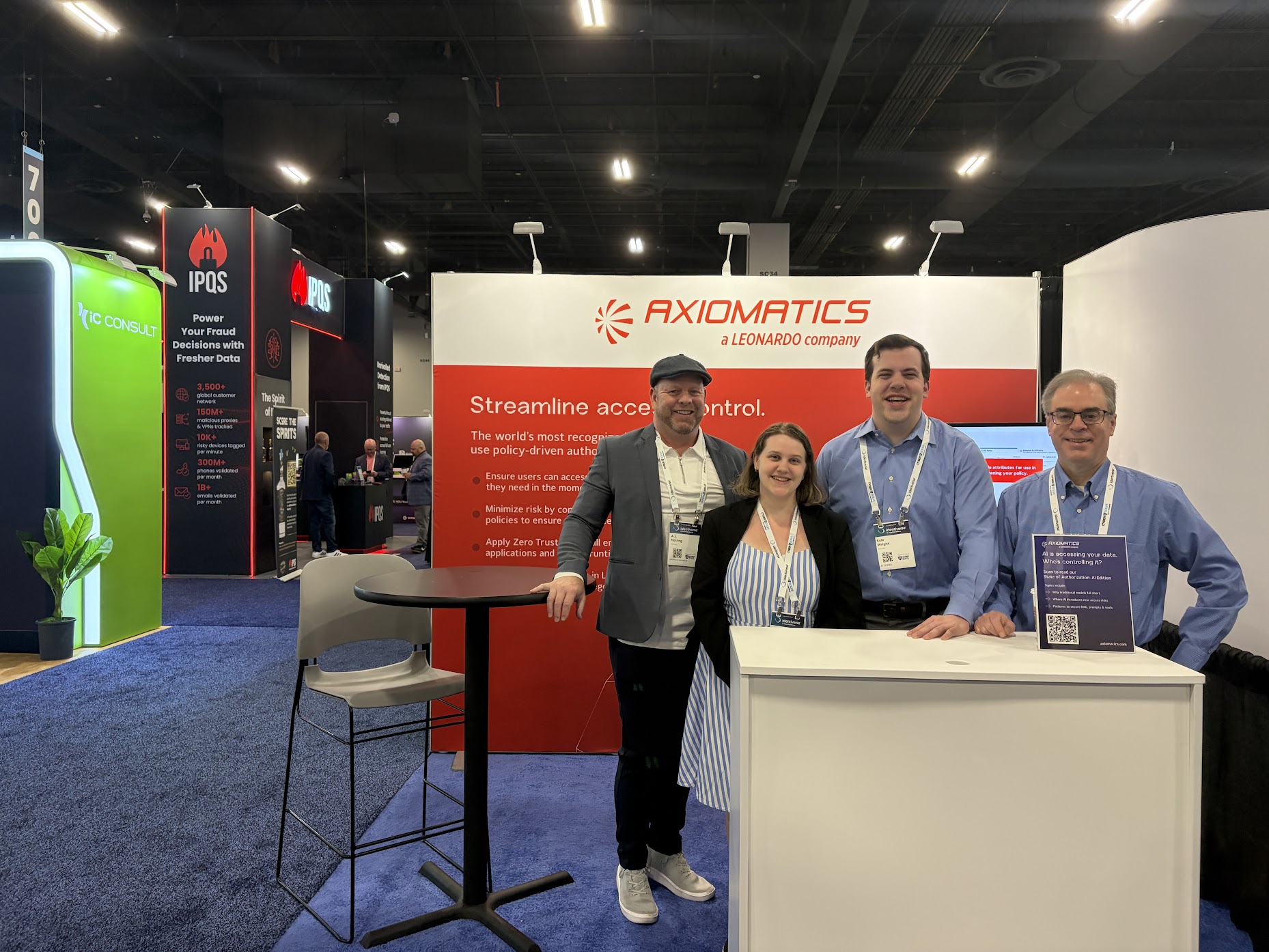
Thank you to everyone who visited the Axiomatics booth. It was great connecting with customers, partners, and fellow identity professionals throughout the event. The conversations we had in Las Vegas reinforced the growing importance of authorization and its role in securing the next generation of AI-powered systems.
Want to learn more about the topics discussed at EIC? Explore these resources: